Fouad I Hygiene Museum: Cairo’s Forgotten Temple of Public Health (1920s–1960s)
DOI:
https://doi.org/10.5281/zenodo.21203743الكلمات المفتاحية:
Hygiene; Museum; Fouad I; Dresden; Abdeen.الملخص
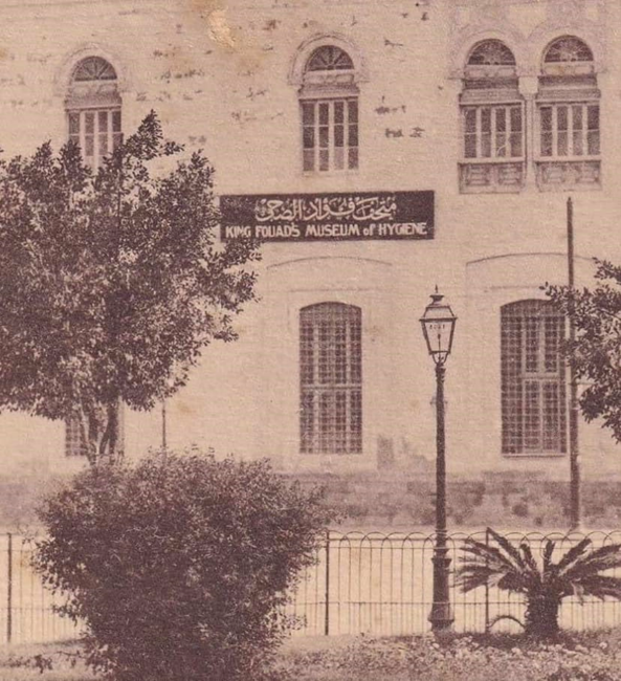
This study is concerned with the history of Fouad I Hygiene Museum in Cairo (FHMC) which was inaugurated in Abdeen in 1927 and moved in the 1960s to the Sakakini Palace where the old FHMC became part of the wider medical museum. The latter included both of the FHMC collection and the history of Egyptian & Arab medicine museum. The FHMC was distinguished with certain features and impacts that were not available in other Hygiene museums abroad. This paper will trace the FHMC’s history, characteristics and targets, and the Egyptian public attitude towards the museum. Although the FHMC, from the 1920s to the 1960s, was a temporary museum in a temporary building but it was real museum visited by considerable number of the Egyptians who registered their visits and the museum impacts on their lives. Hygiene Museums was a fact, from the end of 19th century and during the 20th century, with strong contribution to the global life. Beyond that; many of these museums outside Egypt have succeeded in surviving to this day because they have evolved, embraced scientific advancements, and aligned themselves with the scientific revolution to persist places that visitors enjoy and appreciate.
التنزيلات
المراجع
1. Abd al-Hamid, N. (1982). al-Nashāṭ al-Iqtiṣādī lil-Ajānib wa-Atharuhu fī al-Mujtamaʿ al-Miṣrī: Min sanat 1922 ilā sanat 1952 [The economic activity of foreigners and its impact on Egyptian society: From 1922 to 1952]. al-Hayʾa al-ʿĀmma lil-Kitāb.
2. Abdel Haleem, M. A. S. (2004). The Qurʼan: A new translation. Oxford University Press.
3. Abdel Rahman, H. M. (2023). Egyptian reactions to the discovery and excavation of Tutankhamun's tomb, 1922–1930. Emerging Trends in Social Science, 4, 75–95.
4. Abdul-Aziz, M. H. (2018, May). al-Duktūr Aḥmad ʿĪsā Bek: Ṭabīb Rāʾid wa-Muʿjamī Mukhtaṣṣ wa-Muʾarrikh Thiqa wa-Lughawī Muḥaqqiq, 1876–1946 [Dr. Aḥmad ʿĪsā Bek: Pioneering physician, specialist lexicographer, reliable historian, and accomplished linguist, 1876–1946]. Majallat Kulliyat Dar al-ʿUlūm, (114), 15–52.
5. Abu al-Fadl, M. A. (2001). Kuntu Nāʾiban li-Raʾīs al-Mukhābarāt [I was deputy chief of intelligence]. Dār al-Shurūq.
6. Ākhir Sāʿa. (1961, January 18). Lābudda min izālat hādhā al-sūr [This wall must be demolished]. Ākhir Sāʿa, (1369), 10.
7. al-Ahrām. (1924, March 13). Museum for public health. al-Ahrām, p. 6.
8. al-Ahrām. (1926, July 26). al-Matḥaf al-Ṣiḥḥī wa-Maʿraḍ li-l-Funūn al-Jamīla [The hygiene museum & the fine arts exhibition]. al-Ahrām.
9. al-Ahrām. (1928, May 9). Matḥaf Fuʾād al-Ṣiḥḥī Bayān ʿAnhu [A statement about the Fouad I Hygiene Museum]. al-Ahrām.
10. al-Ahrām. (1961, December 28). Badʾ hadm al-sūr al-ʿālī al-muḥīṭ bi-qaṣr ʿĀbidīn [Demolition begins of the high wall surrounding Abdeen Palace]. al-Ahrām, p. 1.
11. al-Ahrām. (1963, March 29). A new museum of medicine. al-Ahrām, p. 4.
12. al-Ahrām. (1963, October 21). Ḥikāyāt min Qaṣr al-Sakākīnī [Tales of the Sakakini Palace presented by the Hall of Fame in Chicago]. al-Ahrām.
13. al-Ahrām. (2025, July 29). A museum to avoid work injuries. al-Ahrām, p. 9.
14. al-Mamlaka al-Miṣriyya, Wizārat al-Maʿārif al-ʿUmūmiyya, al-Idāra al-ʿĀmma lil-Thaqāfa, and Idārat al-Sijill al-Thaqāfī (1953) al-Sijill al-Thaqāfī sanat 1951. al-Qāhira: al-Maṭābiʿ al-Amīriyya (The Egyptian Kingdom, Ministry of Public Education, General Administration of Culture, Cultural Register Administration. 1953. Cultural Register, 1951. Cairo: Government Press)
15. al-Miṣrī. (1952, December 5). Anjaḥ ʿilāj li-al-amrāḍ al-tanāsuliyya iʿādat tanzīm Matḥaf Fuʾād al-Awwal al-Ṣiḥḥī [The most successful treatment for venereal diseases: Reorganizing the FHMC]. al-Miṣrī, (5395), 6.
16. al-Ṭurābīlī, ʿA. (2003). Aḥyāʾ al-Qāhira al-Maḥrūsa [Quarters of the protected Cairo] (1st ed.). al-Dār al-Miṣriyya al-Lubnānīya.
17. Badran, I. El-G. (1995). The history of the scientific movement in modern Egypt: Medical sciences, medicine, and health during the 19th and 20th centuries (p. 132). Academy of Scientific Research and Technology.
18. Bakr, A. (2008). The royal court and its role in political life, 1863–1952 (1st ed., p. 86). Dar Al-Shorouk.
19. Biographical Notes by Georg Seiring, Cologne 1961. (Compiled by his family), Seiring Private Archive, Germany.
20. Buxton, H. (2018). Health by design: Teaching cleanliness and assembling hygiene at the nineteenth-century sanitation museum. The British Journal for the History of Science, 51(3), 457–485.
21. Chiffoleau, S. (1995). La réforme par l'hygiène. In A. Roussillon (Ed.), Entre réforme sociale et mouvement national (Vol. 1, pp. 421–441). CEDEJ – Égypte/Soudan. https://books.openedition.org/cedej/1433
22. Chiffoleau, S. (2005). Medicine and physicians in Egypt: Constructing professional identity and the medical project (T. Youssef, Ed.; M. Abaza, Trans.). Supreme Council of Culture.
23. Congrès international d’hygiène, de sauvetage et d'économie sociale : Bruxelles, 1876, Paris – Brussels, 1876
24. Conversation with the Undersecretary of Health: Dr. Shaheen Pasha and his observations in Europe. (1929, November 1). Al-Hilal, 38(1), 22–24.
25. Daneshgar, M. (2018). Ṭanṭāwī Jawharī and the Qurʼān: Tafsīr and social concerns in the twentieth century. Routledge.
26. Davidson, R., & Hall, L. A. (2003). Sex, sin and suffering: Venereal disease and European society since 1800. Routledge.
27. Dawoud, F. S. (1917). al-Kanz al-Thamīn li-ʿUẓamāʾ al-Miṣriyyīn [The precious treasure of the great Egyptians] (Vol. 1). Maṭbaʿat al-Iʿtimād.
28. Decree affiliating the Fouad I Health Museum with the Ministry of Public Health (Cabinet Documents, File No. 0081-018931), National Archives (Dar al-Wathaeq al-Qawmiya): Cairo, Egypt.
29. Department of Cultural Bulletins and Periodicals (1956), al-Sijill al-Thaqāfī Sanat 1954 (The cultural registry, year 1954), Government Press.
30. Department of Statistics and Census. (1953). General annual statistics: 1949–1950, Government Press.
31. Egyptian Senate. (1930, May 1). Proceedings of the twenty-sixth session of the Senate (p. 282). Egyptian Government Press.
32. Faraj, F. M. (1924). Taqrīr ʿan Intishār al-Bighāʾ wa-al-Amrāḍ al-Tanāsuliyya bi-al-Quṭr al-Miṣrī (Report on the spread of prostitution and venereal diseases in Egypt), Cairo: al-Asriya Press.
33. Firdaus, S., & Anwar, A. I. (2024). History of hygiene: An overview. International Journal of Unani and Integrative Medicine, 8(1), 7–10.
34. Galal, S. (1960, October 19). Sirr al-maghnaṭīs alladhī shadda ʿumalāqat al-ṭibb ilā al-Qāhira [Cairo magnetic force attracts the giants of medicine to Cairo]. Ākhir Sāʿa, (1356), 11–13.
35. Gamal, N. (2018). The university and adult education (p. 20). Dar Al-Nokhba.
36. Heinrich Heine University Düsseldorf. (2026). GeSoLei: Democratic society on display? Centre for Health and Society. Retrieved May 6, 2026, from https://gesolei.hhu.de
37. Idārat al-Tasjīl al-Thaqāfī) Department of Cultural Registration( (1953). al-Sijill al-Thaqāfī Sanah 1951 [The Cultural Record for the Year 1951]al-Maṭbaʿah al-Amīriyyah bi-Qāhirah (The Amiri Printing Press in Cairo)
38. ʿĪsā, A. (1936). Nécrologie de S. E. le Dr Mohamed Chahine Pacha. Bulletin de l'Institut d'Égypte, 19(1), 5–8.
39. Jawharī, Ṭ. (1928). Al-Jawahir fi Tafsir al-Qurʼan [The jewels in the interpretation of the Qurʼan] (Vol. 10). Mustafa al-Babi al-Halabi & Sons.
40. Jumhūriyyat Miṣr / Wizārat al-Māliyya wa-l-Iqtiṣād / Maṣlaḥat al-Iḥṣāʾ wa-l-Taʿdād – al-ʿUnwān: al-Iḥṣāʾ al-Sanawī al-ʿĀmm – Maṣlaḥat al-Iḥṣāʾ wa-l-Taʿdād 1949–1950 / (1953) (Kingdom of Egypt. Ministry of Public Instruction. General Directorate of Culture. Cultural Registry Department) al-Maṭābiʿ al-Amīriyya bi-al-Qāhira.
41. Kamal, H. (1939, May 1). Taʿlīm al-jumhūr uṣūl al-ṣiḥḥa [Educating the public on the principles of health: Lecture delivered at the School of Social Culture, March 1939]. Al-Muqtaṭaf, (5), 569–576.
42. Krischel, M., Czirr, S., & Moll, F. H. (2025). Zur Visualisierung von „Unaussprechlichem": Geschlechtskrankheiten auf der „Großen Ausstellung für Gesundheitspflege, soziale Fürsorge und Leibesübungen" (GeSoLei) 1926. Urologie.
43. Mahfouz, N. (2005/2006). Ana Naguib Mahfouz: Sīrah dhātiyyah [I am Naguib Mahfouz: An autobiography] (I. Abdel Aziz, Intro.; Vol. 16, p. 48). Al-Majlis al-Qawmī lil-Shabāb.
44. Murʿashlī, Y. (2006). Nathr al-Jawāhir wa al-Durar fī ʿUlamāʾ al-Qarn al-Rābiʿ ʿAshar [Scattering of jewels and pearls on the scholars of the fourteenth century] (Vol. 1). Dār al-Maʿrifah.
45. Neubert, R. (1927). Wie wir in Kairo [ein] Hygiene-Museum bauten (File No. 13686 Deutsches Hygienemuseum e.V., 074). Saxon State Archives Dresden, Germany.
46. Neumann, J. (Ed.). (1987). The first 75 years of the Deutsches Hygiene-Museum in the German Democratic Republic: A historical review. Deutsches Hygiene-Museum in der DDR.
47. Nibrāwī, S. (1927, July). Une visite au Musée d'Hygiène. L'Egyptienne: Revue Mensuelle, (28), 14–17.
48. Riad, N. (1964). Le musée d'histoire de la médecine au Caire et la médecine pharaonique et arabe dans le «Hall of Fame» de Chicago. In R. Blaser & H. Buess (Eds.), Geschichte der Medizin: 19. Internationaler Kongress, Basel, September 1964 (pp. 185–187). S. Karger AG.
49. Seddik, R. A. (2006). The Egyptian press in the nineteenth century: Its history and editorials (p. 20). Dar Al-Shorouk International Library.
50. Shafy, M. Report on My Visit to the Museum and the International Health Exhibition in Dresden, Germany, During July 1930, Submitted to His Excellency, the Undersecretary of the Ministry of Interior for Health Affairs, Dr. Mohamed Shaheen, No. 1540, National Archives (Dar al-Wathaeq al-Qawmiya): Cairo, Egypt.
51. Shaheen, M. (1927, April 20). Khuṭbat al-Duktūr Shāhīn Bāshā fī ḥaflat iftitāḥ jalālat al-malik lil-Matḥaf al-Ṣiḥḥī [Speech at the ceremony of His Majesty the King's inauguration of the Health Museum]. al-Ahrām, (15278), 5.
52. The Parkes Museum of Hygiene. (1879). The British Medical Journal, 2(967), 60–61.
53. Wizārat al-Māliyya, Taqwīm Sanat 1939, Būlāq bi-al-Qāhira, 1939 (Ministry of Finance. (1939). Official Almanac for the Year 1939 (p. 467). Bulaq: al-Maṭbaʿa al-Amīriyya,Government Press.)
54. World Health Organization. (n.d.). Overview (Hygiene). WHO Regional Office for Africa. https://www.afro.who.int/node/5610
55. Zakī, ʿA. R. (1949). Dawr al-Tuḥaf fī Miṣr wa-al-Jamʿiyyāt al-ʿIlmiyya [Museums & scientific societies in Egypt]. Maktabat al-Nahḍa al-Miṣriyya.
56. Zakī, M. M. (1949). al-Aʿlām al-Sharqiyya fī al-Miʾah al-Rābiʿah ʿAsharah al-Hijrīyah, min sanat 1301 ilā sanat 1365 / sanat 1883 ilā sanat 1946 [Eastern luminaries in the fourteenth Hijri century, from the year 1301 to 1365 / 1883 to 1946]. Maktabat Mujāhid.
التنزيلات
منشور
الرخصة
الحقوق الفكرية (c) 2026 Hend Mohamed Abdel Rahman (Author)

هذا العمل مرخص بموجب Creative Commons Attribution 4.0 International License.


